
Instant coffee · Practical guide
How Much Caffeine Is in Instant Coffee? A UK Evidence Guide
We checked the sources on 24 October 2026. This guide may be published later; that doesn’t mean the product details were checked again.
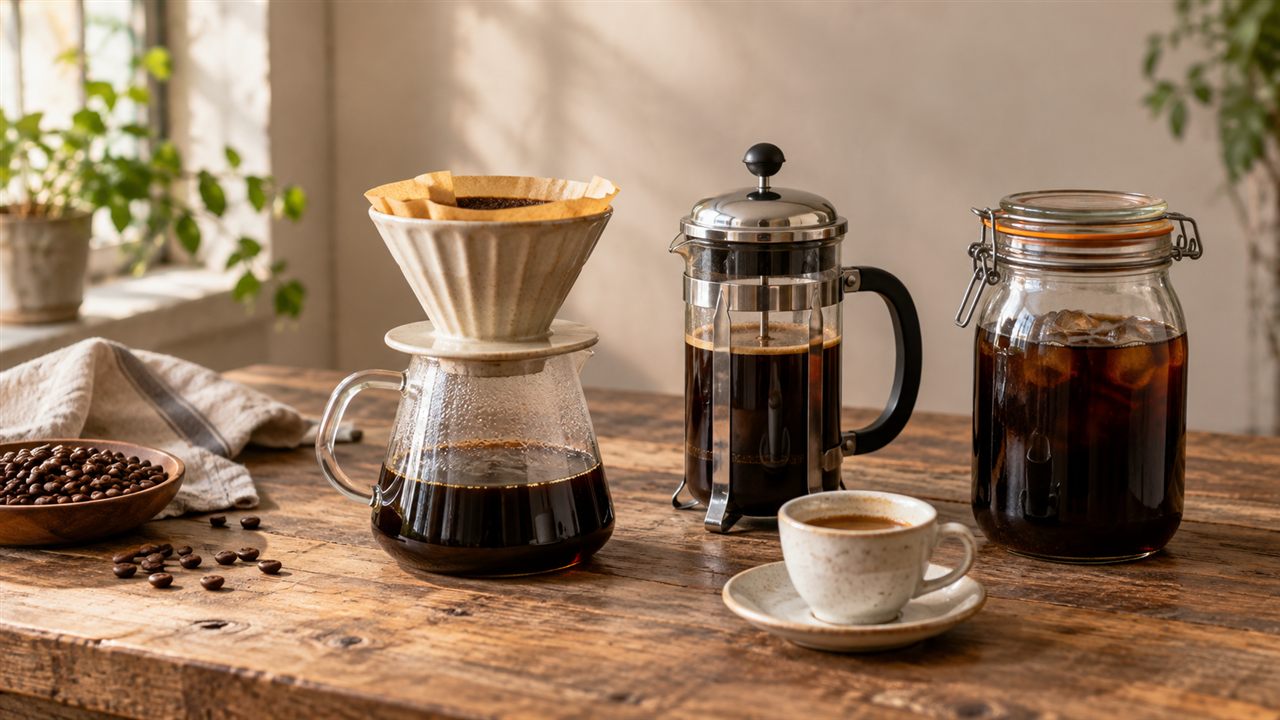
How much coffee goes on your spoon makes a big difference. NESCAFÉ UK gives a caffeine range for Original and Gold, but it doesn’t cover every jar or brand. Here’s how to use that range, and what to do when a brand doesn’t publish an amount.
See the product details
| Product / serving | Caffeine | Whole-pack nutrition | Source and notes |
|---|---|---|---|
| NESCAFÉ OriginalUK · 2 g dry coffee; water not specified | 50–90 mgManufacturer range | Sugar amount unavailable Calories unavailable | NESCAFÉ UK FAQReviewed 2026-10-24. The brand gives this same range for Original and Gold. It doesn’t tell us which has more caffeine, or exactly how much is in your cup. |
| NESCAFÉ GoldUK · 2 g dry coffee; water not specified | 50–90 mgManufacturer range | Sugar amount unavailable Calories unavailable | NESCAFÉ UK FAQReviewed 2026-10-24. The brand gives this same range for Original and Gold. It doesn’t tell us which has more caffeine, or exactly how much is in your cup. |
| NESCAFÉ AzeraUK · Amount not available | Not verified — not zeroAmount not available | Sugar amount unavailable Calories unavailable | NESCAFÉ UK FAQReviewed 2026-10-24. The Original and Gold range doesn’t cover Azera, so we haven’t used it here. |
| NESCAFÉ decaf instant jarsUK · Product-specific amount required | Not verified — not zeroAmount not available | Sugar amount unavailable Calories unavailable | NESCAFÉ UK FAQReviewed 2026-10-24. We couldn’t find an amount for these decaf jars. The brand’s decaf cappuccino sachet is a different product, so its figure wouldn’t answer this question. |
Start with the powder, not the mug
For instant coffee, record the exact product and the mass of powder you dissolve. “A mug” describes the container, not how much coffee went into it. Two people can use the same jar and cup but different amounts of granules. A level spoon, heaped spoon and measuring scoop aren’t interchangeable weights.
Adding water to a fully dissolved measured dose changes its concentration; it doesn’t add more coffee. Milk, ice and syrup also change the finished recipe. Keep those choices separate from the mass of the coffee ingredient when making a caffeine estimate.
What the brand’s range tells you
The linked UK FAQ lists 50–90 mg for a 2 g serving of Original or Gold. This is a range for the named products, not a measurement of your cup. It doesn’t say that Original is the lower end and Gold the upper end. Picking the midpoint would hide uncertainty rather than resolve it.
What can be calculated from that range?
For those named products, a proportional dry-dose calculation is 25–45 mg per gram. A hypothetical weighed 3 g portion gives 75–135 mg. These are calculations from the manufacturer range, not additional laboratory observations. Don’t apply them to decaf, mixed sachets or an unlisted product.
Use our product explorer to keep both ends of the range visible. If a tracker needs one number, recognise that your chosen input is an assumption; the interface can’t identify where an individual cup sits within a range.
Why other brands aren’t ranked here
We couldn’t find matching UK caffeine figures for every supermarket jar. Mixing a label amount, a general estimate and a figure from another country wouldn’t make a fair ranking. If a brand is missing here, it means we still need the information—not that its coffee has less caffeine.
A helpful manufacturer response identifies the product, market, dry mass and whether its answer is a typical value, range or measured batch. An ingredient list alone doesn’t provide that information. You can use the product-request tool to prepare a precise question.
A repeatable way to record your coffee
Weigh a normal dry portion, keep the product name with the entry, and use the source basis shown in the table. If you change jars, don’t silently carry the old figure across. Record uncertainty in the name or notes rather than calling the entry an exact dose. For a source that supplies no amount, leave the amount unknown.
This guide concerns quantity, not a recommendation about how much you should consume. Symptoms, pregnancy, medicines and personal restrictions need advice beyond a product comparison. The calculator can explore an input, but it can’t certify that a drink is suitable for you.
Sources and things to keep in mind
We used AI to help write this guide. We haven’t tested or tasted these products, and the article hasn’t had an independent clinical review. Figures come from the links below. We point out examples, ranges and calculations, and leave missing amounts blank. This is general information, not medical advice.